
Structural / Wood-Destroying Organisms
Termite control and wood borer treatment that protects the structure, not just the surface.
Termites and wood borer work quietly, inside timber and below the slab, and by the time you see them the damage is structural. ASC treats the whole building as a system: a continuous soil barrier, a proper inspection of every accessible timber and a wood-destroying organism certificate your bank and buyer will accept.
Why It Matters
Wood-destroying organisms are a structural risk, not a cosmetic one.
Subterranean termites, harvester termites, drywood termites and wood borer beetles all attack the one material most South African homes and warehouses depend on for their structure: timber. They feed on cellulose in roof trusses, floors, door frames, skirtings and stored packaging, hollowing out sound-looking wood from the inside. The colony is hidden, the workers avoid light, and the first visible sign is often a collapsed cornice, a spongy floorboard or a swarm of winged reproductives against a window. Left alone, an infestation moves from a nuisance to a repair bill measured in tens of thousands of rands, and in extreme cases to a roof that is no longer safe.
Structural damage
Subterranean termites can breach a slab through a hairline crack or an untreated service penetration and reach the roof timbers unseen. By the time damage is visible, load-bearing members are already compromised.
Hidden and continuous
Colonies work day and night behind plaster, under floors and inside walls. There is no seasonal pause, so an untreated property loses timber steadily, year after year.
Property value and transfer
Banks, buyers and conveyancers increasingly require a wood-destroying organism inspection before transfer. Active infestation or unrepaired damage can stall a sale or reduce the price.
False economy of DIY
Aerosols and hardware-store powders kill the workers you can see and leave the colony and the queen untouched. The infestation simply relocates and continues out of sight.
Know The Signs
Seven signs of termites, before the damage is structural.
The clearest signs of a termite infestation are pencil-thin mud tubes running up foundations or walls, timber that sounds hollow or papery when tapped, discarded wings near windowsills and doors after a swarm, small gritty faecal pellets below infested wood, blistering or bubbling paint, and doors or windows that suddenly stick from warped frames. Termites work inside timber and below the slab, so by the time damage is visible the colony has usually been active for months or years.
Mud tubes
Pencil-thin tubes of soil and saliva running up foundations, walls or piers are subterranean termites' shielded route from the ground to timber.
Hollow-sounding timber
Tapping skirting, door frames or floorboards that sound hollow or papery, rather than solid, often means the wood has been eaten from the inside.
Discarded wings
Small, uniform wings shed near windowsills, doors or light fittings mean a termite colony has swarmed to found a new nest nearby.
Frass (faecal pellets)
Small, gritty, wood-coloured pellets pushed out of tiny holes are the signature of drywood termites, which live inside dry timber with no soil contact.
Blistering paint or plaster
Bubbling or peeling paint on skirtings and door frames can be moisture from termite activity working beneath the surface.
Sticking doors & windows
Frames that suddenly stick or are hard to open can mean the timber has warped as termites hollow it out from within.
Seen a mud tube or a swarm of discarded wings? Do not wait for a floorboard to give way — call 041 004 0037 or book an inspection before more of the structure is compromised.
Know Your Enemy
The wood-destroying organisms we treat in South Africa.
Correct identification decides the treatment. A subterranean termite needs a soil barrier, a drywood termite needs the infested timber treated directly, and wood borer needs the whole affected member penetrated. Getting this wrong wastes chemical and leaves the colony alive.
Subterranean termites
Genus Coptotermes and other soil-dwelling termites nest in the ground and build mud tubes up foundations to reach timber. They cause most structural termite damage in South Africa and are controlled with a continuous treated soil barrier.
Harvester termites
Southern harvester termites of the genus Microhodotermes and related harvesters strip vegetation and forage above ground. They damage lawns, thatch and structural timber in contact with soil, and are common on Highveld and Karoo properties.
Drywood termites
Drywood termites live entirely inside dry timber with no soil contact, so a soil barrier does not reach them. They are given away by their gritty faecal pellets and need the infested timber treated directly, replaced or, in severe cases, fumigated.
Wood borer beetles
The European house borer, Hylotrupes bajulus, and other wood borers lay eggs in seasoned softwood. The larvae tunnel for years, leaving fine bore dust and exit holes, and are a common finding in older roof timbers during transfer inspections.
What We Do
A complete termite and wood borer service, from foundation to transfer.
Pre-construction soil treatment
Applied to trenches, foundations and fill before the slab is cast, creating a continuous treated barrier under the whole footprint. This is the single most effective and economical protection a new build can have, because every square metre can be reached.
Post-construction soil treatment
For existing buildings, we re-establish the barrier by rodding, trenching and drilling along foundations, expansion joints and service penetrations, then injecting a registered termiticide to close the routes termites use to reach timber.
Structural inspection
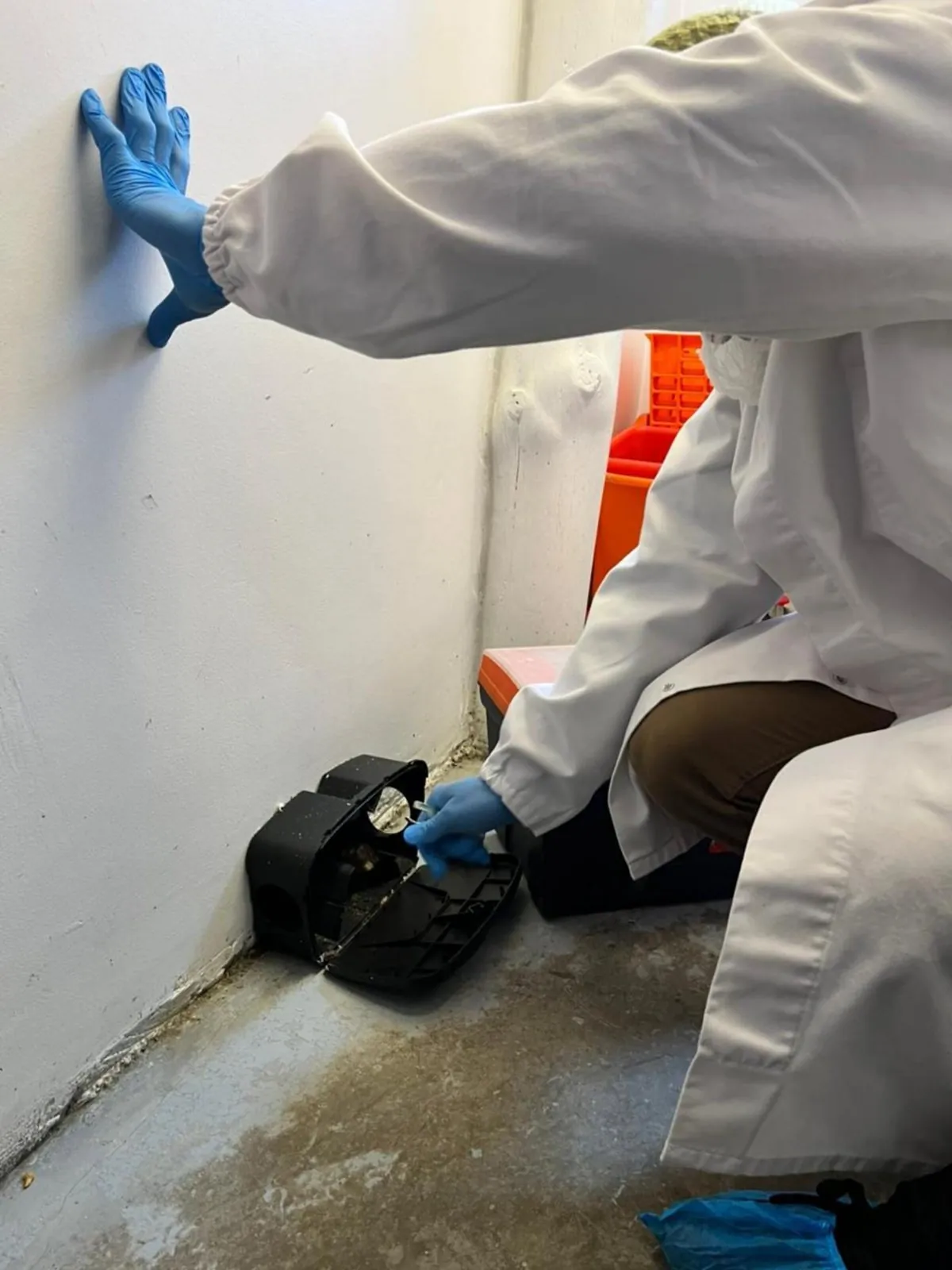
A methodical inspection of accessible timber, roof voids, subfloors and moisture points, using probing and, where needed, moisture readings, to locate active infestation, past damage and the conducive conditions that invite it back.
Drywood and wood borer treatment
Direct treatment of infested members, injection of galleries, surface treatment of at-risk timber and, for heavy or inaccessible infestations, referral to controlled fumigation. We treat the timber, not just the surface.
Harvester termite control
Targeted control of harvester termite foraging and nests where they threaten timber, thatch and grounds, using the least-toxic approach that resolves the problem without carpet-treating the whole property.
WDO certificates for transfer
We inspect, document and, where the property is clear or has been treated, issue a wood-destroying organism certificate that banks, buyers and conveyancers accept for property transfer.
The ASC Difference
Public-health specialists who inspect buildings for a living.
Termite and wood borer treatment is not a spray job. It is a structural intervention that places registered products in the soil and timber around the people who live and work in a building, and it has to be continuous or it fails. ASC is a food safety specialist owned pest control company, which means our people audit and inspect premises to a documented standard every day. We bring that same diligence to a home or a warehouse: accurate identification, correct product choice under Act 36 of 1947, precise application, and a record of exactly what was treated and where.
Every service is captured digitally through the My ASC Pest Hub portal, so your treatment map, product register and inspection findings live in one place. You can pull a complete record and one-click certificate pack whenever a bank, buyer or auditor asks for it, and watch live trend graphs if you manage a portfolio of properties.
- ✓ SAPCA member ASC797, registered PCOs under Act 36 of 1947
- ✓ Structural Pest Control registration P43510
- ✓ Least-toxic, targeted application that cares for people and the environment
- ✓ Digital treatment records and certificate packs via My ASC Pest Hub
Credentials
Registered, accredited and trained to a food safety standard.
Our team is trained well beyond the minimum for a pest control operator. The same food safety and auditing disciplines that protect a factory floor sit behind every soil treatment and structural inspection we do.
Chemical Stewardship
Registered products, placed with care for people and the environment.
Termiticides sit in the soil around a home for years, so how they are chosen and placed matters as much as which one is used. Every product we apply is registered under Act 36 of 1947 for the exact use and target, applied by a registered pest control operator at the correct dose, and recorded on your treatment file. We work prevention first: exclusion, moisture control and removal of timber-to-soil contact reduce how much chemical is ever needed. When treatment is required, we place it precisely where the barrier has to be, not as a blanket spray, protecting your family, your staff, your garden and the soil itself. This is Integrated Pest Management applied to structures, and it is the standard our food industry clients already trust us to hold.
Read: how Integrated Pest Management puts prevention first →
Read: what Act 36 of 1947 requires of every pesticide used →
Read: why a proper risk assessment comes before any treatment →
Where we do this
Termite and wood borer treatment across Gqeberha and Johannesburg
In Port Elizabeth (Gqeberha) coastal humidity and older timber-framed housing make wood borer and subterranean termite damage common, and pre-transfer inspections are a routine part of property sales. On the Johannesburg Highveld, harvester termites in gardens, verges and around foundations are the more frequent call. Both need a soil or timber treatment with written records, not a surface spray.
Nelson Mandela Bay: South End, Newton Park, Walmer, Summerstrand, Humewood, North End, Korsten, Deal Party, Struandale, Perseverance, Markman, Coega IDZ, Kariega (Uitenhage), Despatch.
Greater Johannesburg: Sandton, Randburg, Rosebank, Midrand, Fourways, Roodepoort, Soweto, Edenvale, Bedfordview, Germiston, Alberton, Boksburg, Benoni, Kempton Park, plus City Deep, Isando, Longmeadow, Linbro Park, Wadeville and Alrode.
Pest control in Port Elizabeth (Gqeberha) · Pest control in Johannesburg · East London · Eastern Cape · Gauteng
Questions
Termite and wood borer FAQ
What is the difference between pre-construction and post-construction termite soil treatment?
Pre-construction soil treatment is applied to the ground, foundation trenches and fill before and during building, creating a continuous treated barrier under the structure before the slab is cast. Post-construction treatment protects a building that is already standing, using rodding, trenching and drilling to place a registered termiticide barrier around foundations, along expansion joints and at service penetrations. Pre-construction is far cheaper and more complete because the whole footprint can be reached, which is why it should never be skipped on a new build.
Do I need a wood-destroying organism certificate to sell my property?
Many banks, buyers and conveyancers require a wood-destroying organism inspection and certificate before transfer, particularly in coastal and high-risk termite areas. The certificate confirms the accessible timber has been inspected for termites, wood borer and fungal decay, and records any active infestation or damage found. ASC conducts the inspection, issues the certificate and, where infestation is present, quotes and carries out the treatment needed to clear the property for transfer.
Why use a public-health pest specialist for termite work rather than a general handyman?
Termite and wood borer treatment uses restricted termiticides that must be registered under Act 36 of 1947 and applied only by registered pest control operators. The barrier must be continuous or it fails, and the products sit in soil around a home for years, so accurate placement and dose matter for both the structure and the people living in it. ASC is a SAPCA member (ASC797) with registered PCOs and structural pest control registration P43510, and our specialists inspect and audit buildings for a living, so the diagnosis and the treatment are both done to a documented standard.
How do I tell termites from wood borer?
Subterranean termites leave mud tubes on foundations and walls and hollow timber that sounds papery when tapped. Drywood termites push out small gritty faecal pellets. Wood borer, such as Hylotrupes bajulus, leaves round or oval exit holes with fine powdery bore dust beneath them. A proper inspection confirms which organism is present and how far it has spread before any treatment is chosen.
Do you treat both homes and commercial buildings?
Yes. We carry out termite and wood borer work on residential properties, estates, warehouses, factories and commercial premises across Gauteng and the Eastern Cape, and we integrate structural protection with the wider commercial pest programme where a business needs both.
How much does termite treatment cost in South Africa?
Cost depends on whether it is pre-construction (priced per square metre of footprint, before the slab is cast) or post-construction (priced on the perimeter to be rodded, trenched and drilled around an existing building), plus the extent of any drywood or wood borer treatment needed. We quote after inspecting the property, because the accessible timber, the foundation type and how far an active infestation has spread all change the number.
What does it mean if I see flying termites (swarmers) in my house?
Winged reproductives, or swarmers, leave a mature termite colony to found new nests, usually after rain in warm weather. Seeing a swarm inside your home, or a pile of shed wings on a windowsill, means there is an established colony close by, often within the structure itself. This is one of the clearest signs to book an inspection rather than wait.
Can I treat termites myself?
Hardware-store sprays and foams kill the individual termites they touch but rarely reach the colony or the queen, and a soil barrier that is not continuous simply gives termites a gap to route around. Termiticides are also restricted products under Act 36 of 1947, requiring a registered operator to purchase and apply legally. DIY treatment usually delays proper treatment while the colony keeps feeding.
How long does a termite soil treatment last?
A correctly installed soil barrier using a modern registered termiticide typically protects a structure for around five to eight years, depending on the product, soil conditions and whether the barrier is disturbed by later building work such as new paving, plumbing or landscaping. We record the treatment date and product on your file so renewal timing is never a guess.
Next Step
Book a termite and wood borer inspection.
A registered specialist will inspect your foundations and timber, identify the organism, and design a treatment or certificate solution around your building and your risk.